
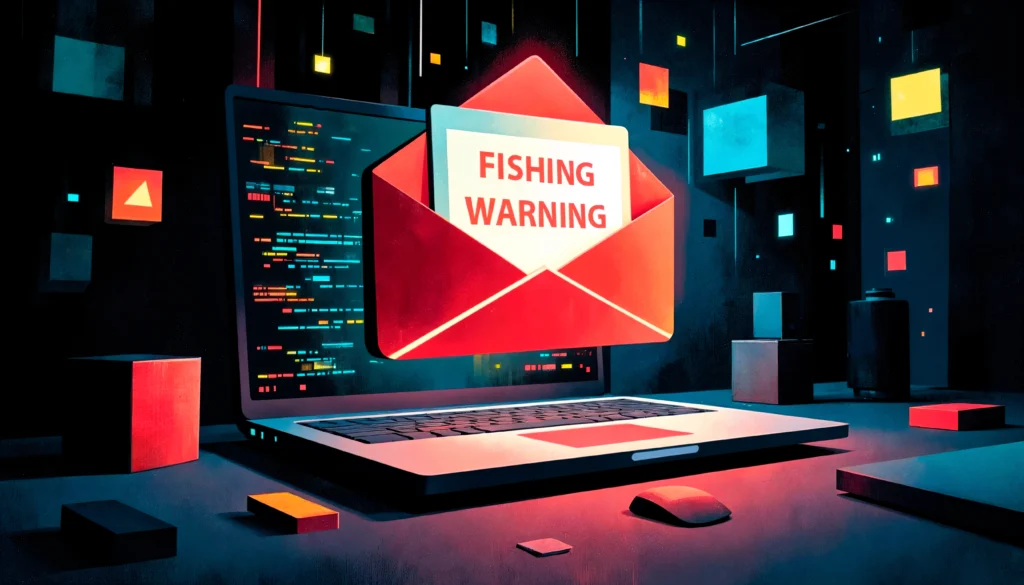
An employee receives an email. It looks official. It has the company logo. It references a real project.
The message says:
“Urgent action required.”
Without thinking twice, the employee clicks the link and logs in. Within seconds, their credentials are stolen. No malware. No system hack. Just one click. This is how most cyber attacks begin today. Phishing is not a technical exploit. It is a psychological attack.
Across the UAE, as businesses rely more on email, cloud platforms, and digital communication, phishing attacks have become one of the most common entry points for cyber threats. According to the IBM Security, phishing is a leading cause of data breaches worldwide.
The attack is simple. The impact is massive.
What is a Phishing Attack
Phishing is a type of cyber attack where attackers impersonate a trusted source to trick individuals into revealing sensitive information.
This may include:
- login credentials
- financial data
- personal information
Instead of breaking systems, attackers convince users to give access voluntarily.
Why Phishing Attacks Are So Effective
Phishing works because it targets human behavior.
People respond to:
- urgency
- authority
- fear
- familiarity
Attackers use these triggers to create convincing messages.
Real-World Insight
An email appears to come from a senior executive. It asks for immediate action.
Employees respond quickly without verification.
Common Types of Phishing Attacks
Phishing is not limited to emails. It exists in multiple forms.
Email Phishing
The most common type. Attackers send emails that look legitimate.
Example
A message asks the user to reset their password. The link leads to a fake login page. Credentials are captured.
Spear Phishing
Highly targeted phishing. Attackers research the victim.
Example
An email references a real colleague or project. This increases trust.
Whaling Attacks
Targets high-level executives.
Example
An attacker impersonates a CEO or CFO. Requests financial transactions. High impact, high risk.
SMS Phishing (Smishing)
Uses text messages instead of email.
Example
A message claims a bank issue and asks for verification. Users respond quickly due to urgency.
Voice Phishing (Vishing)
Uses phone calls to manipulate victims.
Example
An attacker pretends to be IT support. Requests login credentials.
A Real-World Phishing Scenario in UAE
A finance department receives an email from what appears to be a vendor. The email requests an urgent payment update. The employee processes the request.
Later, it is discovered:
– The email was fake
-The payment went to an attacker
– No system was hacked
– Trust was exploited
How Phishing Leads to Larger Attacks
Phishing is often the first step.
Once attackers gain access, they:
- move across systems
- escalate privileges
- access sensitive data
https://elewix.com/managed-detection-response/
Phishing opens the door for bigger attacks.
Why Traditional Security Cannot Stop Phishing
Traditional tools focus on:
- blocking malware
- detecting threats
But phishing bypasses these controls. It relies on human action.
Real-World Insight
Even with strong security systems, a user can still:
- click a link
- share credentials
- approve access
Technology alone is not enough.
The Business Impact of Phishing Attacks
Phishing can lead to:
- financial fraud
- data breaches
- account compromise
- operational disruption
In many cases, the impact is immediate.
How Businesses Can Prevent Phishing Attacks
Prevention requires a multi-layered approach.
Employee Awareness Training
Employees must learn:
- how to identify phishing
- how to respond safely
- spam filters
- email authentication protocols
- threat detection tools
Multi-Factor Authentication
Even if credentials are stolen, MFA prevents access.
Verification Processes
Encourage employees to verify:
- unusual requests
- financial transactions
- sensitive actions
Monitoring and Detection
Monitor login behavior and unusual activity.
Industry Use Cases
-
Financial Sector
Focus on preventing fraud and unauthorized transactions. -
Healthcare
Protect patient data and system access. -
E-commerce
Secure customer accounts and payment systems. -
Enterprise Businesses
Reduce risk across departments.
Future Trends in Phishing Attacks
Phishing is becoming more advanced.
Attackers are using:
- AI-generated emails
- deepfake voices
- personalized attacks
Attacks are becoming harder to detect.
The Bigger Picture: Human-Centric Security
Cybersecurity is shifting toward human awareness. Employees are the first line of defense.
Organizations that train their teams reduce risk significantly.
Conclusion
Phishing attacks are one of the most common and effective cyber threats because they target human behavior rather than systems.
For businesses in the UAE, where digital communication is essential, understanding and preventing phishing is critical.
Organizations that combine awareness, security controls, and monitoring are better equipped to defend against these attacks.